


Mobile system with a digital twin for the diagnosis and support of therapy of patients with neurological diseases
https://doi.org/10.21122/2309-4923-2026-2-70-76
Abstract
The neural network for diagnosis is trained on international data from patients with neurological diseases (ND). The neural network (NN) is dynamically updated with data on the condition of a particular patient to support therapy. An IoT device (smartphone) collects patient data (voice, movement), initiating their preprocessing and feature extraction. This data is transmitted via the local Flask framework to a server using Open Semantic Technology for Intelligent Systems (OSTIS), a platform that processes and interprets patient information. An NN-based forecasting agent on the server, using a trained neural network, performs the patient's diagnosis, which is transmitted to the doctor. Treatment of ND requires continuous, adaptive and individual therapy. The NN-based electronic therapy unit, which includes modules for patient and doctor, decision-making and the patient's digital twin, expands the diagnostic system to support therapeutic decisionmaking. The block searches for the patient's previous condition; predictive modeling: course of treatment, drug therapy; explanation for the doctor. The block structure includes: a recurrent neural network based on GRU, a component of the semantic memory of the OSTIS system, context-sensitive rules in the form of SC-graphical forms.
About the Author
U. A. Vishniakou
Belarusian State University of Informatics and Radioelectronics
Belarus
Belarus
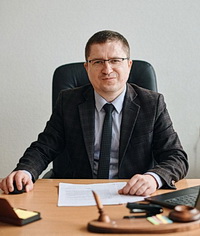
Uladzimir Anatolyevich Vishnyakov - Doctor of Technical Sciences, Professor.
Minsk.
E-mail: vish2002@list.ru
References
1. Sveinbjornsdottir S. The clinical symptoms of Parkinson's disease. Journal of Neurochemistry. 2016;139Suppl1:318–324. https://doi.org/10.1111/jnc.13691.
2. Upadhya S.S., Cheeran A.N. Discriminating Parkinson and healthy people using phonation and cepstral features of speech. Procedia Computer Science. 2018;143:197–202. https://doi.org/10.1016/j.procs.2018.10.376.
3. Xu Z., Wang J., Zhang Y., He X. Voiceprint recognition of Parkinson patients based on deep learning. arXiv. 2018;Dec:1–10. https://doi.org/10.48550/arXiv.1812.06613.
4. Kim D.Y., Hwang S.H., Kim M.G., Song J.H., Lee S.W., and Kim I.K. Development of Parkinson patient generated data collection platform using FHIR and IoT devices. Studies in Health Technology and Informatics. 2017;245:141–145.
5. Anter A.M., Zhang Z. E-health Parkinson disease diagnosis in smart home based on hybrid intelligence optimization model. In: Hassanien A, Shaalan K, Tolba M, eds. Proceedings of the International Conference on Advanced Intelligent Systems and Informatics 2019. Vol 1058. Advances in Intelligent Systems and Computing. Springer; 2020:153– 162. https://doi.org/10.1007/978-3-030-31129-2_15.
6. Kintonova A., Sabitov A., Povkhan I., Khaimulina D., and Gabdreshov G. Organization of online learning using the intelligent metasystem of open semantic technology for intelligent systems. Eastern-European Journal of Enterprise Technologies. 2023;1(2(121)):29–40. https://doi.org/10.15587/1729-4061.2023.272952.
7. Vishniakou U.A., Xia Y. IT diagnostics of Parkinson’s disease based on the analysis of voice markers and machine learning. Doklady BGUIR [BSUIR Reports]. 2023;21(3):102–110. http://dx.doi.org/10.35596/1729-7648-2023-21-3-102-110.
8. Vishniakou U., Xia Y. Models and algorithms for the diagnosis of Parkinsons disease and their realization on the Internet of Things network. Global Journals of Research in Engineering. 2024;24(J1):43–49. https://doi.org/10.34257/GJREJVOL24IS1PG43.
9. Sakar C.O., Serbes G., Gunduz A., Tunc H.C., Nizam H., Sakar B.E, and et al. A comparative analysis of speech signal processing algorithms for Parkinson’s disease classification and the use of the tunable Q-factor wavelet transform. Applied Soft Computing. 2019;74:255–263. https://doi.org/10.1016/j.asoc.2018.10.022.
10. Vishniakou U.A., Xia Y. inventors; Belarusian State University of Informatics and Radioelectronics, assignee. Patent 048311, G10L 15/01 (2013.01) G10L 25/00 (2006.01) G16Y 40/20 (2020.01). Sposob diagnostiki bolezni Parkinsona v seti internet veshchei, osnovannyi na analize golosovykh markerov [Method for diagnosing Parkinson’s disease in the Internet of Things network based on the analysis of voice markers] : Eurasian patent application EA 202392267 A1. November 13, 2024. Available at: https://libeldoc.bsuir.by/bitstream/123456789/59103/1/Pat_048311.pdf (accessed 17th June 2026) (in Russian).
Review
For citations:
Vishniakou U.A. Mobile system with a digital twin for the diagnosis and support of therapy of patients with neurological diseases. «System analysis and applied information science». 2026;(2):70-76. (In Russ.) https://doi.org/10.21122/2309-4923-2026-2-70-76
Views:
116
JATS XML



 Email this article