


A system dynamics approach to modeling the organizational model of production management at an industrial enterprise
https://doi.org/10.21122/2309-4923-2026-2-15-22
Abstract
The article examines an approach to the design and analysis of the organizational model of production management at an industrial enterprise based on cognitive and simulation modeling. The relevance of the study is due to the need to improve industrial enterprise management systems under conditions of high external environmental variability, increasing complexity of production and managerial relationships, and the insufficiency of static optimization models for describing the dynamics of organizational processes. The aim of the study is to formalize the organizational model of production management at a metallurgical enterprise using a causal loop diagram and to implement it subsequently in a simulation modeling environment. The research employs methods of systems analysis, economic-mathematical modeling, cognitive modeling, and system dynamics modeling. The organizational structure of the enterprise is presented as a set of production and functional subsystems interconnected through vertical and horizontal managerial interactions, while the key parameters of the model include span of control, management personnel maintenance costs, production capacity, sales volume, and net profit. The constructed cognitive map made it possible to identify the main cause-and-effect relationships among the organizational, production, and financial parameters of the enterprise, while the simulation model enabled an assessment of the impact of managerial decisions on the dynamics of costs and financial performance. The results obtained show that the use of cognitive maps in combination with simulation modeling expands the possibilities for analyzing the stability of the organizational structure and for substantiating decisions aimed at its improvement. The practical significance of the study lies in the possibility of applying the proposed approach to the design and adjustment of management systems in metallurgical and other industrial enterprises.
About the Author
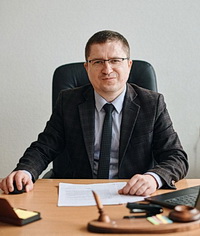
O. Golda
Belarusian State University at Informatics and Radioelectronics (BSUIR)
Belarus
Belarus
PhD in Economics, Associate Professor at the Department of Software of Information Technologies BSUIR.
Minsk
References
1. Forrester J. Indystrial Dynamics. Moscow: Progress; 1971. 340 p. (in Russian).
2. Ginis L.A., Gordienko L.V. Modeling Complex Systems: A Cognitive Set-Theoretic Approach. Rostov-on-Don; Taganrog: Yuzhnyi Federal'nyi Universitet Publ.; 2016. 159 p. (in Russian).
3. Sterman J. Business Dynamics: Systems Thinking and Modeling for a Complex World. Moscow: Al'pina Pablisher; 2000. 994 p. (in Russian).
4. Tkachenko V.A., Chimshit S.I., Kozlov E.V. Design of organizational structure of management on industrial enterprises. Economic Herald of the Donbas. 2010;3(21):154–164. Available at: https://www.evd-journal.org/download/2010/2010-3/ek_visnyk_3_2010-154-164.pdf (accessed 17 June 2026) (in Russian).
5. Khanina A.V. Ehkonomika i upravlenie organizatsiei (metallurgicheskogo profilya) [Economics and Management of the Organization (Metallurgical Profile)]. Moscow: KnoRus; 2026. 204 p. (in Russian).
6. Sokolov B., Spesivtsev A., Lapitskaya N., Semyonov A. // Consideration of non-factors in complex models of agricultural production. Robotics in Agriculture (ADOP 2025). 2026;1:393–402. https://doi.org/10.1007/978-3-032-07171-2_32.
7. Zelentsov V., Mochalov V., Lapitskaya N. Methodology for assessing the quality of multispectral space imaging data in landscape element monitoring. Robotics in Agriculture (ADOP 2025). 2026;1:355–366. https://doi.org/10.1007/978-3-032-07171-2_29.
8. Golda O.A. Model' upravleniya proizvodstvom metallurgicheskikh predpriyatii [Production management model for metallurgical enterprises]. Aktual'nye voprosy sovremennoi informatiki [Topical Issues of Modern Informatics]. 2015;V:126–130 (in Russian).
9. Mintzberg H. Structure in Fives: Designing Effective Organizations. St. Petersburg: Piter; 2012. 512 p. (in Russian).
10. Gubko M.V. Optimal hierarchies of control for cost functions representable as a sum of homogeneous functions. Control Sciences. 2009;3:44–53. Available at: https://cyberleninka.ru/article/n/optimalnye-ierarhii-upravleniya-dlya-funktsiy-zatrat-predstavimyh-v-vide-summy-odnorodnyh-funktsiy (accessed 17 June 2026) (in Russian).
11. Ivanova O.E., Abrashkin M.S., Pol'skaya S.I. Cognitive models of industrial enterprise cost management with identifiable parameters. Russian Journal of Management. 2025;7:194–205 (in Russian). https://doi.org/10.29039/2500-1469-2025-13-7-194-205.
12. Gorelova G.V. Cognitive modeling of complex systems, state and prospects. Sistemnyi analiz v proektirovanii i upravlenii [System Analysis in Design and Management]. 2021;XXV(1):224–248 (in Russian). https://doi.org/10.18720/SPBPU/2/id21-66.
13. Mityakov E.S., Karpukhina N.N., Mityakov S.N., Ladynin A.I. Cognitive modelling of economic development of industrial ecosystems. Russian Journal of Industrial Economics. 2025;18(1):63–77 (in Russian). https://doi.org/10.17073/2072-1633-2025-1-1383.
14. Radaev A.E., Kobzev V.V. Imitatsionnoe modelirovanie proizvodstvennykh sistem [Simulation Modeling of Production Systems]. St. Petersburg: POLITEKh-PRESS; 2022. 136 p. (in Russian).
Review
For citations:
Golda O. A system dynamics approach to modeling the organizational model of production management at an industrial enterprise. «System analysis and applied information science». 2026;(2):15-22. (In Russ.) https://doi.org/10.21122/2309-4923-2026-2-15-22
Views:
151
JATS XML



 Email this article